Some of us don’t just fear rejection.
Our brains process it like danger.
Like we’ve been publicly shamed. Like we’ve done something terribly wrong … even if no one else sees it that way.
This isn’t insecurity. It’s not overthinking.
And it’s definitely not about being “too sensitive.”
It’s something called Rejection Sensitive Dysphoria, or RSD.
And for many people with ADHD, it’s a very real , and often invisible , part of how we move through the world.
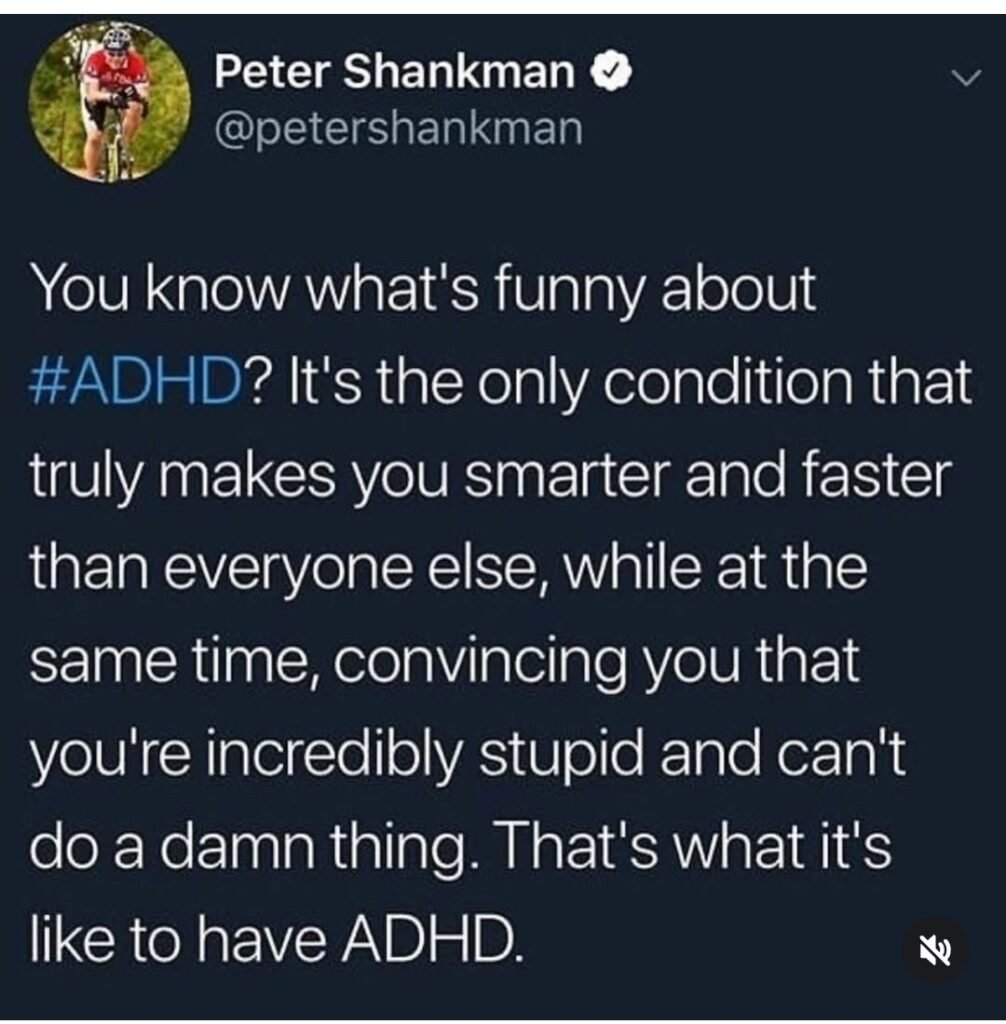
What is Rejection Sensitive Dysphoria (RSD)?
RSD is an intense emotional reaction to real or perceived rejection, criticism, or failure.
But here’s the important bit: it’s neurological, not personality-driven.
In ADHD brains, the systems that regulate emotions – especially the amygdala and prefrontal cortex function differently. Our dopamine pathways are underactive, which means the emotional reward and threat systems are heightened and less balanced. So when something feels like rejection, even slightly, our brains treat it like a major threat.
That flood of emotion? It’s chemical. Fast. Overwhelming. Often hard to explain to others , or even to ourselves.
And no…it doesn’t happen all the time. Some days we’re completely steady. Sometimes things roll off our back. But when RSD does hit, it’s immediate and visceral. It hijacks the moment. And that’s what makes it hard ,not just for us, but for the people around us, especially if they don’t understand what’s going on.
This isn’t just “not being able to handle rejection”
Everyone feels bad when they’re rejected.
But RSD is different. It’s not just disappointment… it’s a nervous system meltdown. A surge of shame, panic, or self-loathing that can come out of nowhere. Often, nothing even happened… we just thought someone was displeased or distant, and our body reacts as if we’re being punished.
We know it’s irrational. But it still feels true. And that’s where the suffering lives… in the disconnect between logic and the nervous system.
It’s not a character flaw.
It’s not drama.
It’s how our brains are wired… and it needs compassion, not correction.
How RSD Shows Up – Even When You Don’t See It
RSD isn’t always obvious to others. On the outside, we might seem quiet. Withdrawn. Maybe over-eager. Maybe a bit much. But inside, it feels like an emotional hurricane. Here’s how it shows up in real life:
In Our Own Heads
You send a message. It’s seen, but not replied to. Ten minutes later, your brain is writing a script:
“I shouldn’t have said that. They must think I’m annoying. Did I overshare? Are they avoiding me?”
Sometimes the spiral starts before we can catch it. Not because we want to be dramatic , but because our brains leap to self-blame faster than we can reason with them.
In Romantic Relationships
A slow reply. A change in tone. A cancelled plan.
For someone with RSD, these small moments can feel like relationship-ending threats. And because we don’t want to seem needy, we often say nothing …but inside, we’re battling waves of panic or sadness.
Sometimes we get quiet. Sometimes we over-apologize. Sometimes we end things ourselves… just to avoid feeling abandoned first.
In Friendships
We might pull back without warning… not because we’re angry, but because we feel ashamed.
Maybe we think we’ve said too much. Or we sense the vibe has shifted. Or maybe nothing happened at all, but our brain decided something did.
Friendships with RSD can look inconsistent. But often, we’re just trying to protect ourselves from a rejection that never actually happened.
At Work
Feedback feels like failure. Silence feels like judgment.
You present an idea, and someone says, “Have you thought about doing it differently?” .. and suddenly you’re questioning your entire value in the team.
RSD at work can lead to burnout…. not from the workload, but from the emotional effort of masking how deeply we’re affected by interactions that others might barely notice.
In Creativity
This one hits hard.
You pour your heart into something … a talk, a design, a piece of writing …and then one lukewarm reaction, or even just silence, and your brain says: “Delete it. You’re not good enough.”
RSD makes us tie our worth to our work. Which means sharing anything becomes an emotional risk … even when we know it’s good.
So, what helps?
(Or at least, what helps me when I feel the spiral coming)
Let’s be honest ! there’s no instant fix.
But here are five things I do when rejection feels like a full-body threat, even if I know it’s not rational.
1. I name it and I say it out loud
It sounds strange, but this matters:
“Okay. This is rejection sensitivity. My brain’s reacting, but that doesn’t mean the story is true.”
Just naming it makes it a thing. A pattern. A response. Not my fault .. and not my identity either.
2. I stop trying to fix the vibe
RSD makes you want to control the narrative. To explain yourself. Apologize. Smooth things over, even when no one asked you to.
I’ve learned to let the discomfort sit. Not everything needs a follow-up message. Not every awkward moment needs repairing.
Some things are better left alone , even if my brain hates the silence.
3. I lean on anchor habits, not explanations
When I’m emotionally hijacked, I can’t logic my way out. So I don’t try.
Instead, I do one grounding thing : a walk, a lift session, a playlist I’ve saved for this exact moment. Something physical. Something familiar. Something that reminds me: You’ve been here before. You always come back.
4. I reality-check the story in my head
My brain tells dramatic stories. Yours might too.
So I ask:
- What did they actually say?
- What facts do I have?
- What would I tell a friend if they felt this way?
The goal isn’t to erase the feeling , it’s just to make space for a second perspective.
5. I build self-trust – one moment at a time
When RSD shows up, it makes me doubt myself , not just how others see me, but how I see myself.
So now, my healing doesn’t come from being liked. It comes from asking:
- Did I show up with honesty?
- Did I stay kind to myself afterward?
- Did I handle that better than I would have last year?
That’s how I know I’m growing.
Not by how smooth everything goes , but by how I treat myself when it doesn’t.
Final thoughts
If you’re someone who experiences rejection sensitivity, you’re not broken.
You’re just wired to feel the world a little louder. A little deeper. And yes, sometimes, a little more painfully.
But that sensitivity? It also means you care. You notice nuance. You love with intensity. You pick up on emotions others miss. And once you learn how to hold your own emotional storms : you become incredibly powerful.
This isn’t about fixing who you are.
It’s about understanding how you work .. so you can lead with compassion, not fear.
And if you’re someone who doesn’t experience RSD … but you love or work with someone who does – I hope this helped you see it more clearly. This isn’t weakness. It’s just a different kind of wiring.
One that needs less judgment … and more understanding.